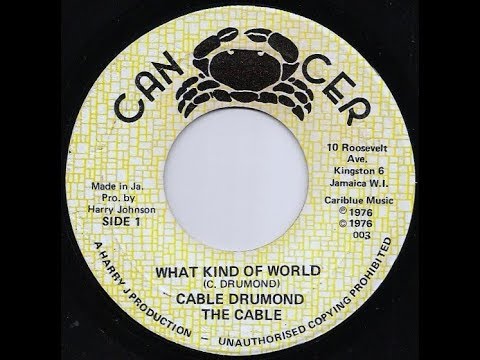

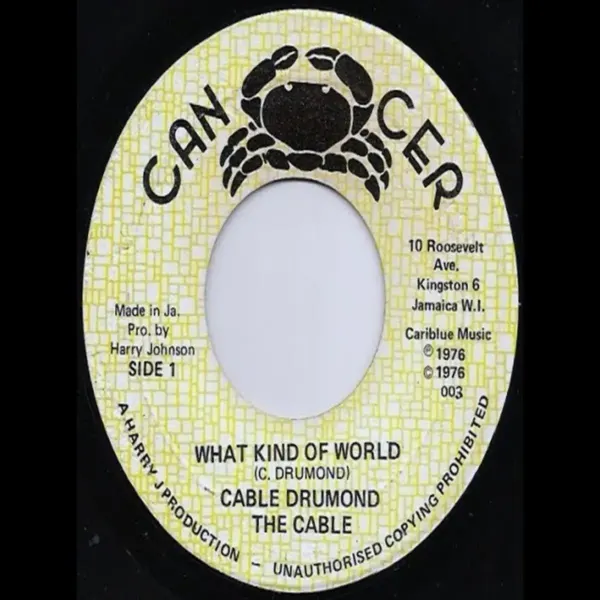
What Kind Of World produced by Lloyd Dennis, Joe Gibbs, Errol Thompson, Coxsone Dodd, Henry Lawes, Lloyd Campbell for Pickout, Studio One, Iron Side, Volcano, Music Lab, HMG, Joe Frasier in 1968
Produced by Lloyd Dennis, Joe Gibbs, Errol Thompson, Coxsone Dodd, Henry Lawes, and Lloyd Campbell, What Kind Of World Riddim pulls together a long-running reggae foundation that stretches from the late 1960s into later roots and dancehall versions. The cut list pairs classic names like Cornell Campbell and Sound Dimension, Sugar Minott, Barrington Levy, Ranking Joe, and Dub Specialist with later appearances from Glen Washington, Jimmy Riley, Little John, and Mighty Tolga, which gives the riddim a clear roots-to-dancehall span. The title track from Cornell Campbell and Sound Dimension anchors the set, while Barrington Levy’s 21 Girls Salute, Sugar Minott’s Change Your Ways, and Ranking Joe’s Love Is Like A Light Post are among the more notable versions. With production tied to labels and camps like Studio One, Joe Frasier, Volcano, and Pickout, the release reflects the way this riddim moved across different eras and studios without losing its original shape.
What Kind Of World Riddim Release Details
- Riddim year: 1968
- Total tracks: 13
- Unique artists on riddim: 14
- Production credits: Various Labels
- Key artists on this riddim: Barrington Levy, Cornell Campbell, Glen Washington, Sugar Minott
- Browse this riddim in year & database lists: 1960s-80s Riddims Archive
What Kind Of World Riddim Tracklist:
- Barrington Levy – 21 Girls Salute (1980)
- Cornell Campbell & Sound Dimension – What Kind Of World (1982)
- Derrick Parker – One Night Stand
- Dub Specialist – Austin Chuck (1975)
- East Man Project – 3 Wise Men (2000)
- Glen Washington – More Time (2000)
- Jimmy Riley – Love Is The Key (2000)
- Little John – Be My Wife (2002)
- Mighty Tolga – Bless You (2000)
- Prince Garthie – Moody Groove (1972)
- Ranking Joe – Love Is Like A Light Post (1980)
- Sugar Minott – Change Your Ways (1977)
- The Cables – What Kind Of World (1968)