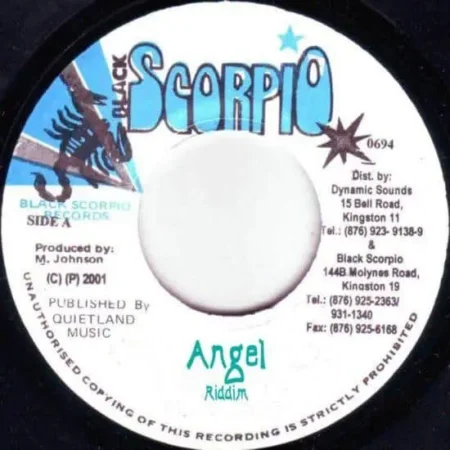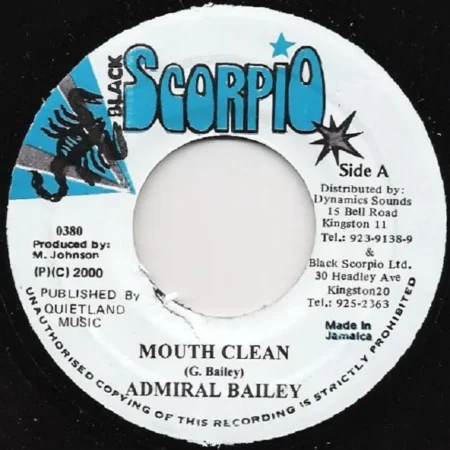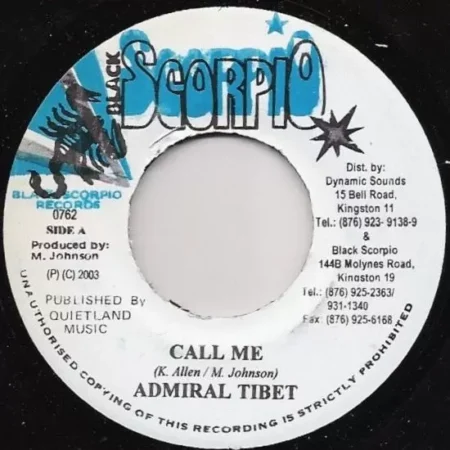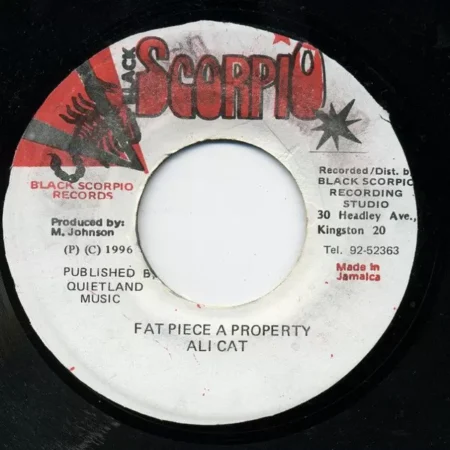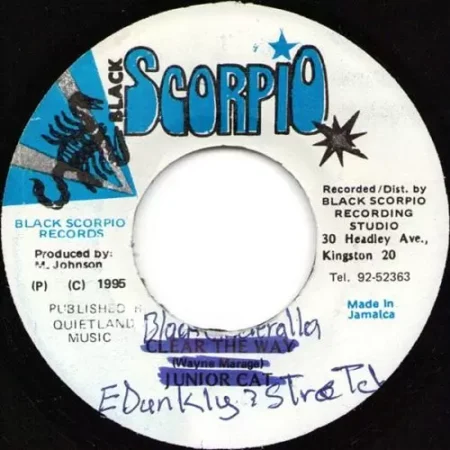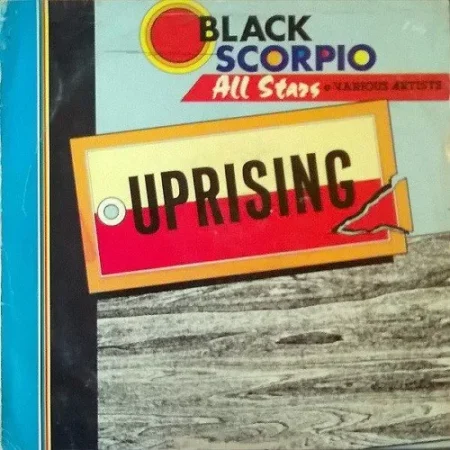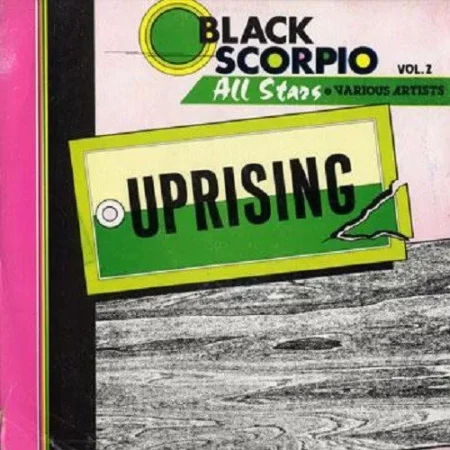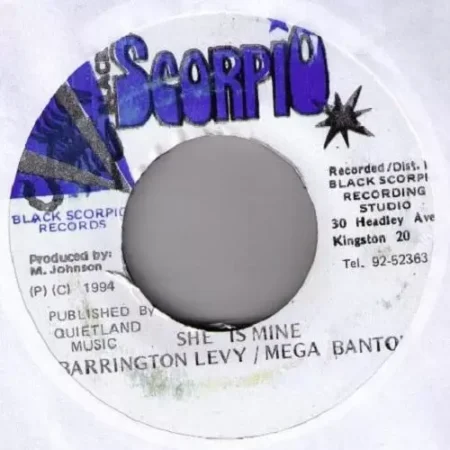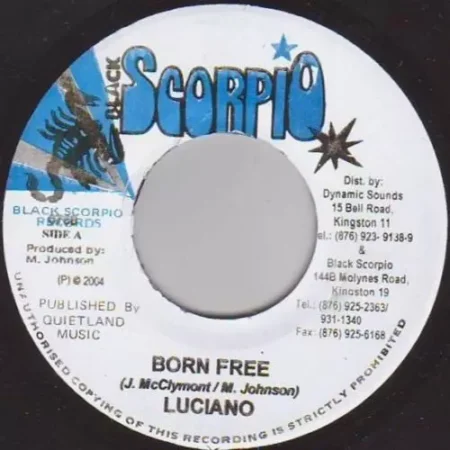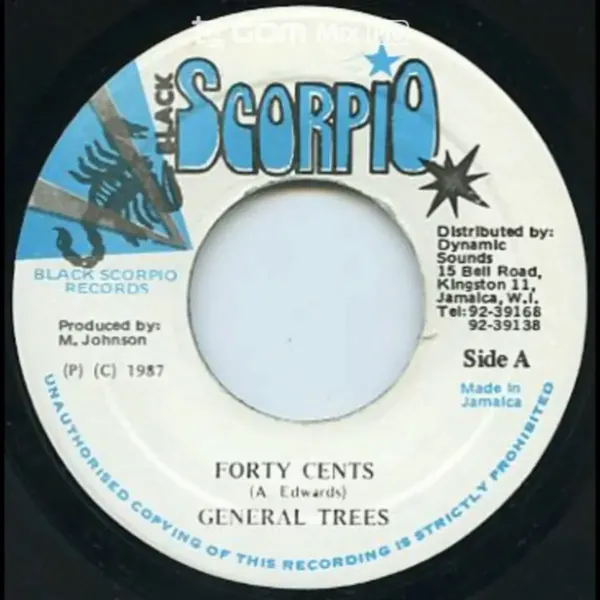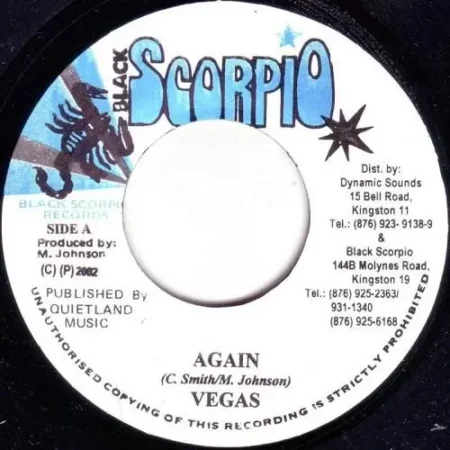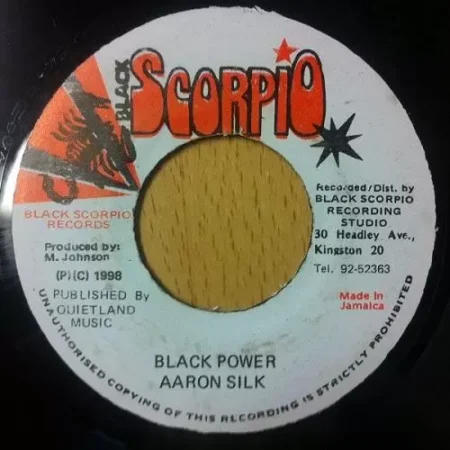

Black Scorpio is one of Jamaica’s most respected sound systems
and dancehall production names, closely associated with Maurice
“Jack Scorpio” Johnson, who helped shape the project from the late
1960s onward. Johnson began building his reputation in Drewsland,
Kingston, where he first operated a small setup and gradually
developed the Black Scorpio name into a fixture of local sound
system culture. By the 1980s, that foundation had expanded into a
recording label and studio operation, giving the brand a stronger
place in the island’s fast-moving dancehall scene.
Black Scorpio’s importance comes from its bridge between the
classic sound system era and the modern producer-led dancehall
business. Johnson was known not just as a selector and operator,
but as a sharp ear for artists who could cut through in the dance.
The label became especially active in the 1980s and 1990s,
recording a wide range of singers and deejays and helping to define
the harder, more driving edge of Jamaican dance music during that
period. Its catalog has been linked with names such as Gregory
Isaacs, Dennis Brown, Frankie Paul, Beenie Man, Luciano, and others
who helped carry reggae and dancehall worldwide.
The Black Scorpio sound also earned a reputation for competition
and stage presence. In Jamaican sound clash culture, it was
regarded as a serious contender, and Johnson’s long-running profile
in the scene gave the brand added weight beyond the studio. The
“Horseman Sound” nickname attached to the system reflected the
identity Johnson built around it, rooted in his personal interests
and the distinctive image he projected around the sound. That
character helped make Black Scorpio memorable in a culture where
image, selection, and crowd response mattered as much as recording
output.
Among the label’s better-known releases, tracks like “Pink Eye” and
“Pocomania Jump” are often recalled as part of its early rise,
while later dancehall cuts such as “Sound Boy Killing” showed that
the Scorpio name could still cut through in a changing market. The
archive also points to the label’s continuing relevance through
later riddims and releases, including How Does It Feel Riddim. In
2010, Maurice Johnson was inducted into the IRAWMA Hall of Fame, a
formal recognition of a career that helped connect sound system
tradition with decades of Jamaican recording history.